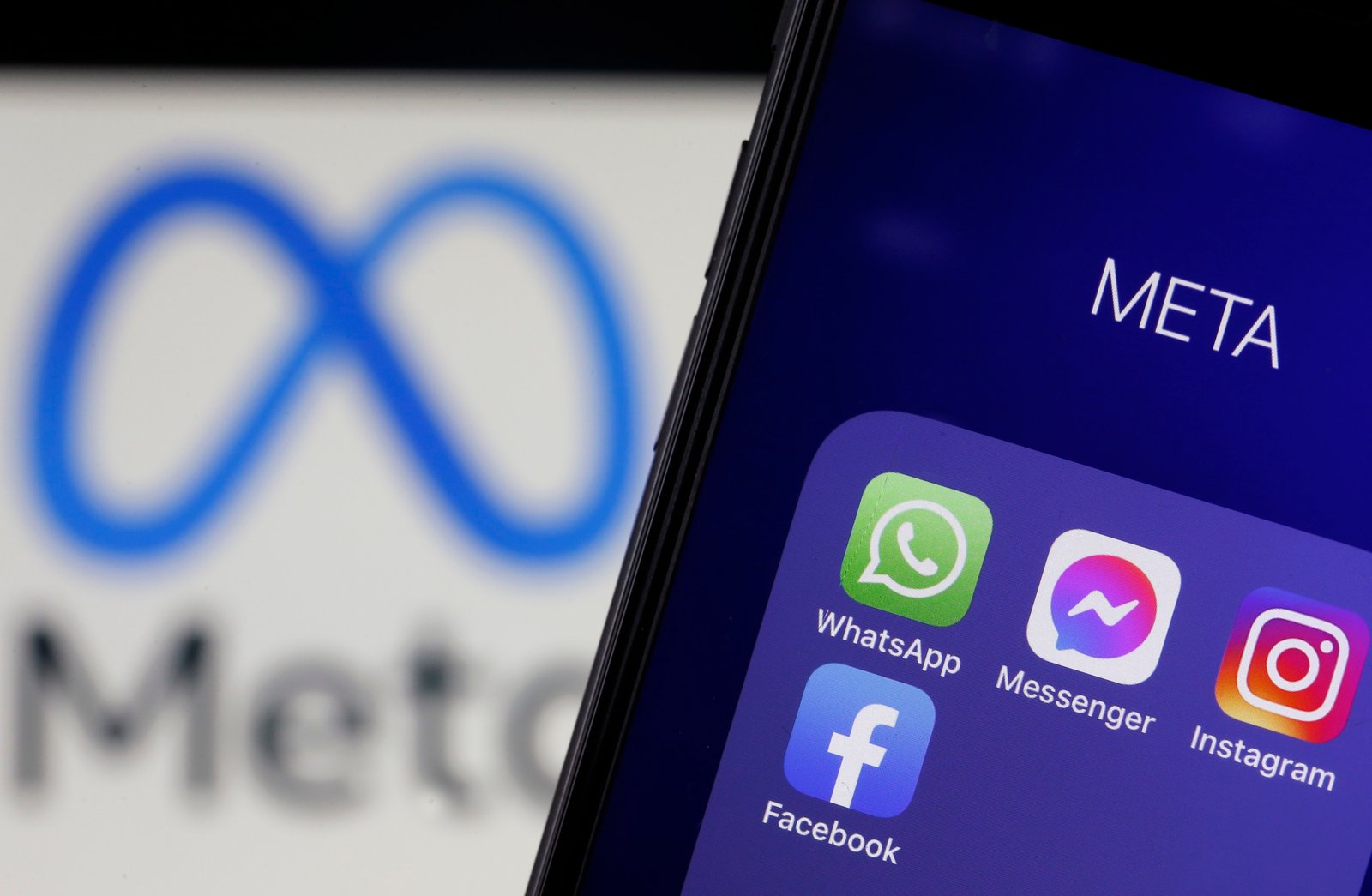
Facebook went down for users across at least ten countries on Friday morning, with “is Facebook down” searches surging as the platform abruptly logged people out and rejected fresh login attempts. Outage tracker Downdetector logged more than 100,000 problem reports for Facebook by 10 a.m. ET, around 7:30 p.m. IST, after complaints began climbing shortly after 9 a.m. ET. The disruption spread beyond Facebook itself, hitting Messenger, parts of Instagram and Meta’s advertising tools. Meta acknowledged the problem within the hour, and reports began falling by late morning, making this one of the company’s most visible service failures of 2026 so far.
The failure announced itself in an unusual way. Instead of pages simply refusing to load, users were thrown out of active sessions and shown a “query error” message when they tried to sign back in, even with correct passwords. Reports came in from the United States, the United Kingdom, Canada, Australia, the Philippines, Egypt, Portugal and Norway, among other countries, on both mobile apps and desktop browsers.
The timeline was compressed. Downdetector data showed the spike beginning just before 9:30 a.m. ET and peaking at 69,569 simultaneous reports at 9:39 a.m. Meta communications chief Andy Stone confirmed on X that the company was aware users were having trouble accessing its services and said teams were working on a fix. By around 10:30 a.m. ET, complaint volumes had started to decline, and regional outlets reported service returning for most users before midday on the US East Coast.
What broke inside Meta
The error pattern points to a server-side failure rather than anything on users’ devices. A query error during login typically signals a malfunction in the backend systems that authenticate accounts or retrieve account data. That is why no amount of cache clearing, app reinstalling or password resetting helped affected users, and why the problem hit people on completely different networks and devices at the same moment. Meta had not published a technical explanation of the root cause at the time of writing, so the precise trigger remains unconfirmed.
The damage was uneven across Meta’s apps. Facebook took the heaviest hit, with most complaints tied to logins and the main feed. Messenger users could not sign in or send messages. Instagram suffered a partial outage, with feeds failing to refresh for some users while others scrolled normally. Some users also reported trouble with WhatsApp’s desktop features, though the messaging app held up better than its siblings.
Advertisers took collateral damage
Businesses felt the outage in a way ordinary users did not. Meta’s Ads Manager, the tool brands use to run and monitor campaigns across Facebook and Instagram, showed significant disruption during the outage window. For advertisers, a delivery blackout is not just an inconvenience. Campaigns can continue spending while performance tracking and delivery are impaired, which is why industry guidance during Meta outages is to pause active campaigns until the company confirms full restoration. Small businesses that rely on Messenger for customer enquiries also lost a sales channel for the duration.
Friday’s incident fits a recurring pattern, though it sits in the middle of the severity scale. In March 2024, a login failure generated more than 500,000 Downdetector reports and locked users out of Facebook and Instagram for over two hours before Meta blamed an unspecified technical issue. A late-2024 disruption ran for several hours across Facebook, Instagram, Threads and WhatsApp. Against those episodes, a roughly two-hour disruption with reports in the low hundreds of thousands is serious but not unprecedented. The recurrence is the real story: each incident renews questions about concentration risk when billions of people and millions of businesses depend on one company’s infrastructure.
For users, the practical playbook during any Meta outage is short. Check an independent tracker such as Downdetector to confirm the problem is platform-wide rather than personal. Avoid repeated password resets, which can trigger temporary account locks once service returns. Treat any message offering to restore or verify your account during an outage as a likely scam, because phishing attempts reliably spike when users are anxious about access. Then wait, because a server-side failure can only be fixed by Meta.
The open questions now sit with Meta. The company restored service quickly but has not explained what failed, whether the authentication fault was linked to a software update, and what safeguards will prevent a repeat. Advertisers will be watching for any statement on make-goods for campaigns that ran during impaired delivery, and outage trackers will show over the coming days whether residual login problems linger for a subset of accounts.
The next signals to watch are a possible technical postmortem from Meta’s engineering channels, any update to the company’s business status page, and follow-up data on whether Friday’s failure was a one-off or the start of a cluster, as happened in 2024. For a company whose apps function as core communication infrastructure in markets like India, the Philippines and Brazil, each outage adds pressure to show that reliability is keeping pace with scale.