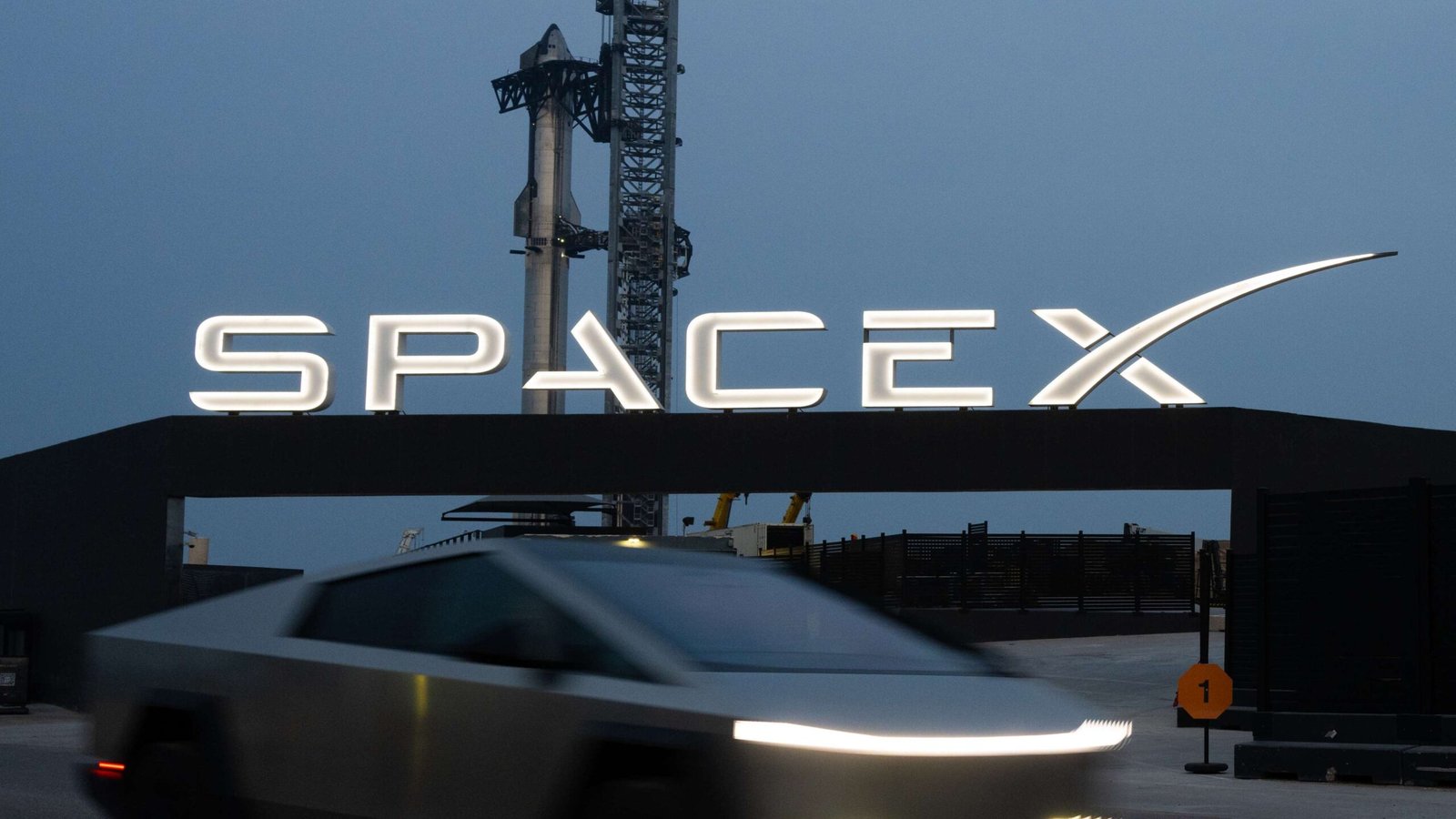
The SPCX price opened at $150 on the Nasdaq on Friday, 11 percent above SpaceX’s $135 offer price, then climbed past $164 in midday trade as the largest IPO in history reached the public market. Elon Musk’s rocket, satellite and AI company raised a record $75 billion in the offering, valuing the business at roughly $1.78 trillion and making Musk the world’s first trillionaire on paper. For the millions of investors who have waited years for a way to own SpaceX, Friday was the first day the stock could actually be bought.
SpaceX priced the deal on Thursday night at a fixed $135 per share, breaking with the standard practice of marketing a price range, a move with few precedents among major US listings. The company sold 555.6 million shares, and the offer was led by Goldman Sachs, Morgan Stanley, Bank of America, Citigroup and JPMorgan alongside 18 other banks. At the offer price, SpaceX entered the market as the seventh most valuable US-listed company.
The $75 billion raise comfortably beats the previous record, Saudi Aramco’s $29 billion listing in 2019, and ends 24 years of SpaceX as a private company. The company marked the moment with simultaneous bell-ringing ceremonies at the Nasdaq MarketSite in Times Square and its Starbase facility in Texas, where president Gwynne Shotwell told employees “we have a history of making history.”
SPCX price action after the open
The SPCX price ran as high as $168.75 shortly after trading began, pared back to around $158, then recovered to trade near $164 by midday in New York, roughly 22 percent above the offer price. Sharp swings in the first sessions are widely expected. “The stock is bound to be volatile,” said Howard Chan, chief executive of Kurv Investment Management, who suggested the price needs time to settle. With a fixed offer price and demand running well ahead of supply, the opening days are a live auction for what SpaceX is actually worth.
SpaceX stock demand and retail allocation
Anyone with a brokerage account can buy SpaceX stock now at the market price under the ticker SPCX, but getting shares at the $135 offer price was a different contest. SpaceX reportedly targeted a retail allocation of around 30 percent of the deal, several times the 5 to 10 percent typical of large IPOs, after retail orders reportedly exceeded $100 billion. The books closed a day early on Wednesday, and the offer ran roughly four times oversubscribed according to Reuters, though oversubscription figures are routinely inflated by institutions padding orders to secure allocations.
Musk crosses the trillionaire threshold
The debut made Elon Musk the first person in history with a net worth above $1 trillion, at least on paper. Musk holds about 42 percent of SpaceX through a dual-class structure that gives him roughly 82 percent of voting control, and with his Tesla holdings and other assets, estimates now put his fortune at around $1.1 trillion. The milestone drew immediate criticism, with Oxfam describing it as a new pinnacle of oligarchy. The wealth creation runs deeper than one man: around 4,400 SpaceX employees could become millionaires from the listing, according to a New York Times estimate.
The valuation is the uncomfortable part of the story. SpaceX reported $18.67 billion in revenue for 2025, up 33 percent year on year, driven largely by Starlink subscriptions across 164 countries, but it swung to a net loss of $4.94 billion, with cumulative losses of $8.7 billion from January 2025 through March 2026. A $1.78 trillion price tag on a loss-making company prices in Starlink’s continued growth, the Starship programme, and Mars ambitions that remain years from producing revenue. That gap between today’s financials and tomorrow’s promise is exactly where the volatility will come from.
The debut also lands as a signal for the broader market. Wedbush analyst Dan Ives framed the listing as a defining moment for the technology sector as AI and space infrastructure converge, and a successful SPCX debut strengthens the case for other mega-private companies weighing listings. SpaceX is also dual-listing on Nasdaq Texas, the exchange’s new Texas venue, a first for an offering of this scale.
What happens next will decide whether Friday’s pop holds. Underwriters control a greenshoe option of roughly 83 million additional shares worth around $11.2 billion, which can be exercised if demand stays strong. Nasdaq has proposed fast-track rules that could put SPCX into the Nasdaq 100 index within weeks rather than months, a move that would force index funds to buy. The first earnings report as a public company is expected on September 2, 2026, the first hard test of whether the growth story matches the price.
The open questions are the ones that matter for anyone watching the SPCX price from here: whether the stock holds above its $135 floor once early enthusiasm fades, how much supply hits the market when employee and insider lock-ups expire, and whether Musk’s attention, split across Tesla, xAI and SpaceX, becomes a governance question now that public shareholders own a piece of the rocket company. The IPO record is settled. The price discovery has just started.